

A grant from The Pixel Fund is helping Blue Smile deliver 1:1 arts-based therapy for children in Cambridgeshire primary schools, providing prompt, specialist help to those who need it most.
This funding is helping us target support for children at schools in the most deprived areas of the county. Children from the poorest 20% of households are four times more likely to have serious mental health difficulties by age 11 than those from wealthiest 20% (Morrison Gutman et al, 2015).
Despite Cambridge’s economic prosperity, there are pockets of real deprivation across the county, with three neighbourhoods in Cambridge city classed on the Index of Multiple Deprivation as among the 20% most deprived in England - Blue Smile is working in the primary schools serving all these areas.
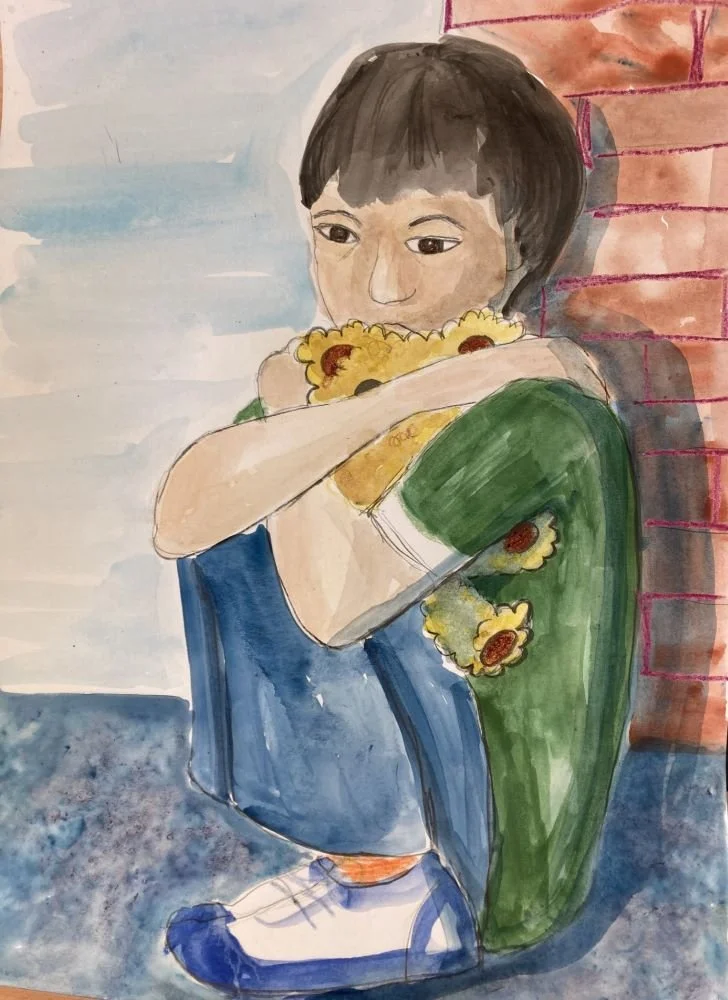
We help fill a significant gap for children aged 3-13 whose needs are too complex to be met by school staff but do not meet the very high threshold for NHS services. Last year, 87% of children made progress towards their goals after Blue Smile support.
Teachers and parents tell us pressures on children’s mental health are greater than ever but Blue Smile’s support has a positive impact on emotional wellbeing, relationships, behaviour and ability to learn – so they can enjoy happier childhoods and build brighter futures.
Oliver, age 9
(Name has been changed and identifiable details removed to protect privacy)
Oliver didn’t like to leave his mum. He worried about her being alone because she had problems with her health, which had led to periods in hospital. He was also finding it hard to get used to living in a new area, since moving house. Oliver’s anxiety often led to physical symptoms like sickness and headaches.
In the mornings, Oliver would struggle to go to school as he didn’t want to be apart from his mum. When he did manage to go to school, he was often tearful and struggled with friendships. His mind would be swirling with worries.
When he started therapy sessions, Oliver was eager to explore his emotions and liked using creative ways to express himself. Supported by his therapist, he started using playdough and paint to represent his worries around illness, uncertainty and mortality. Together, they explored Oliver’s feelings about his complex family situation and his own hopes and dreams for the future.
As they delved into his big feelings of sadness, anger and fear, Oliver’s therapist taught him some “grounding techniques” to help if he started to feel overwhelmed– like blowing bubbles to regulate breathing. Football and dance also started to play an important part in his healing journey.
By the end of his sessions, Oliver showed much greater self-confidence. He made several new friends in class, and found great joy in participating in an organized football tournament. With this therapist’s support, he showed remarkable growth in his ability to cope with the challenging circumstances in his life.